

The ReinVention
A man with a plan

This summer, I suffered from a rather peculiar form of writer’s block. It’s not that I didn’t have anything to say, rather, there wasn’t much of a point in saying it. I don’t need to add to the barrage of takes that everything has gotten noticeably worse, rather than just being a curmudgeon about it as I was in the ZIRP era where I was learning from, rather than quoting, financial bloggers. Instead, I spent the time ruminating (while waiting for the seemingly endless process of regulator approval to conclude) and looking inward, and reframing the narratives I’ve used to motivate myself to adapt to the coming decade ahead.
Gregor Samsa woke up one day to find himself transformed into a portfolio manager. As he grows accustomed to his newfound state, he realizes that his returns came from rationally inducing depression about the state of the world into everyone as a way to not panic and overreact. Then everyone stopped talking to him and he died, but not before generating massive alpha for stakeholders.
One of the formative experiences as to why I chose a life out of college, rather than a resume, was due to an experience in college at my junior year internship. Having been convinced to take a trading role at an investment bank, rather than a now-mainstream firm equivalent to Jane Street, I showed up to work on day 1 only to find out that, three weeks prior, the entire team I was supposed to work with had been poached by Goldman, with the head of the desk who hired me having quit to start a pesticide company (or so the rumor went.) For weeks, I had absolutely nothing to do, so I entertained myself by working off hangovers and talking to my desk neighbor, a grey-haired stereotypical British killjoy twenty-five years my senior whose first job was at Enron. While expressing my frustrations over how poorly a business could be run if a supposedly “elite hire” was being paid six figures to put their head down on a desk grade-school style, he interjected and made a statement that sticks with me to this day:
“I have a mortgage and kids, which is why I show up to work and do this. Why are you sitting in here? Go do anything else.”
This is about a good a kick in the pants as you can get at 20 years old, and the most dangerous one you can hear at 30. Preserving and leaning into optionality, especially when it’s unclear what your upside is, or what regime will best enable your talent, is a tight-rope act but leaves you significantly better prepared for the “meaningful” years as you approach peak career/status/earning power. What’s a mistake is thinking that there is any going backwards in this process. A large part of my summer introspection was understanding that you don’t get to start over after 28 — that anything you do going forward must build off of what you’ve mastered by then — as there’s no time to “catch up” to someone with a lifetime of grey matter programmed and optimized on that trajectory where the grass seems greener. By committing to things, and having strong opinions that are weakly held, your ability to course correct is only limited by the time you’re asleep at the wheel.
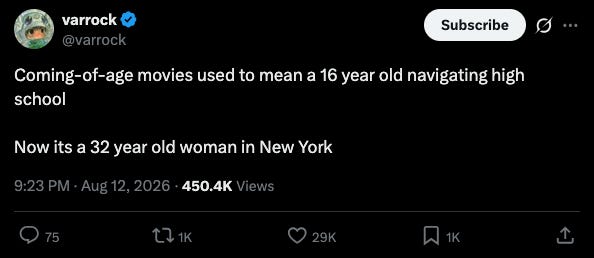
There’s a fine line in knowing when to commit to things and when to preserve optionality, and it’s almost entirely tailored to the individual. (Once again, “statistics don’t apply to individuals in a population”, “exceptions do not disprove a general rule”, etc. rear their head again. People are predictable, but circumstances are unique.) But one thing I’m certain of is that you have to go out to come back in. There is no “linear progression” to achieve a meaningful outcome, which is why so many high school reunions are filled with people who checked all the boxes of college and brand-name job meaningfully, yet wake up at 30 years old and decide travel is going to be their personality. So much of what I see around me is a form of stunted adolescence — rather than a high school letterman jacket — because the idea of “playing for 35”, as I call it, is increasingly unclear when you need outsized situational awareness to even project what the 2030s will look like, and our vocational/experiential institutions have largely failed to properly orient anyone who went to school during the remote-learning years onwards.
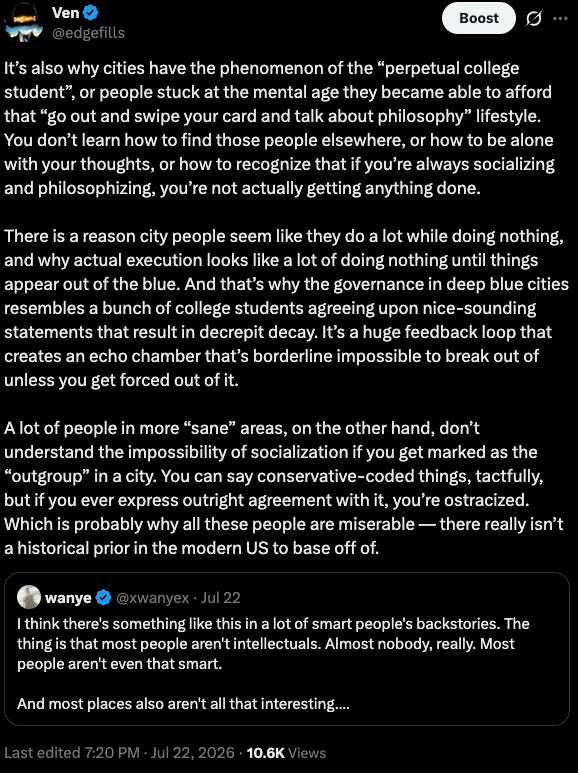
This fear of the future is reflected in basically everything topical nowadays, from politics to media to even video games. (Admittedly, though, League Classic is one of the best nostalgia hits I’ve ever experienced — it really was that good.) What prevents lookback bias leading to “stuck” mindsets and recursive loops is being able to admit that you’re wrong. Which is why I fell in love with trading in the first place — the profit and loss forced me to draw conclusions other than “I’m right all the time”. It’s only by getting a little older, and gaining perspective that many, many brilliant people have tried to impose their will on the world in their early 20s and settled into a role completely different than what they expected, where I feel I no longer need direct PnL to draw deep conclusions about the way the world works.
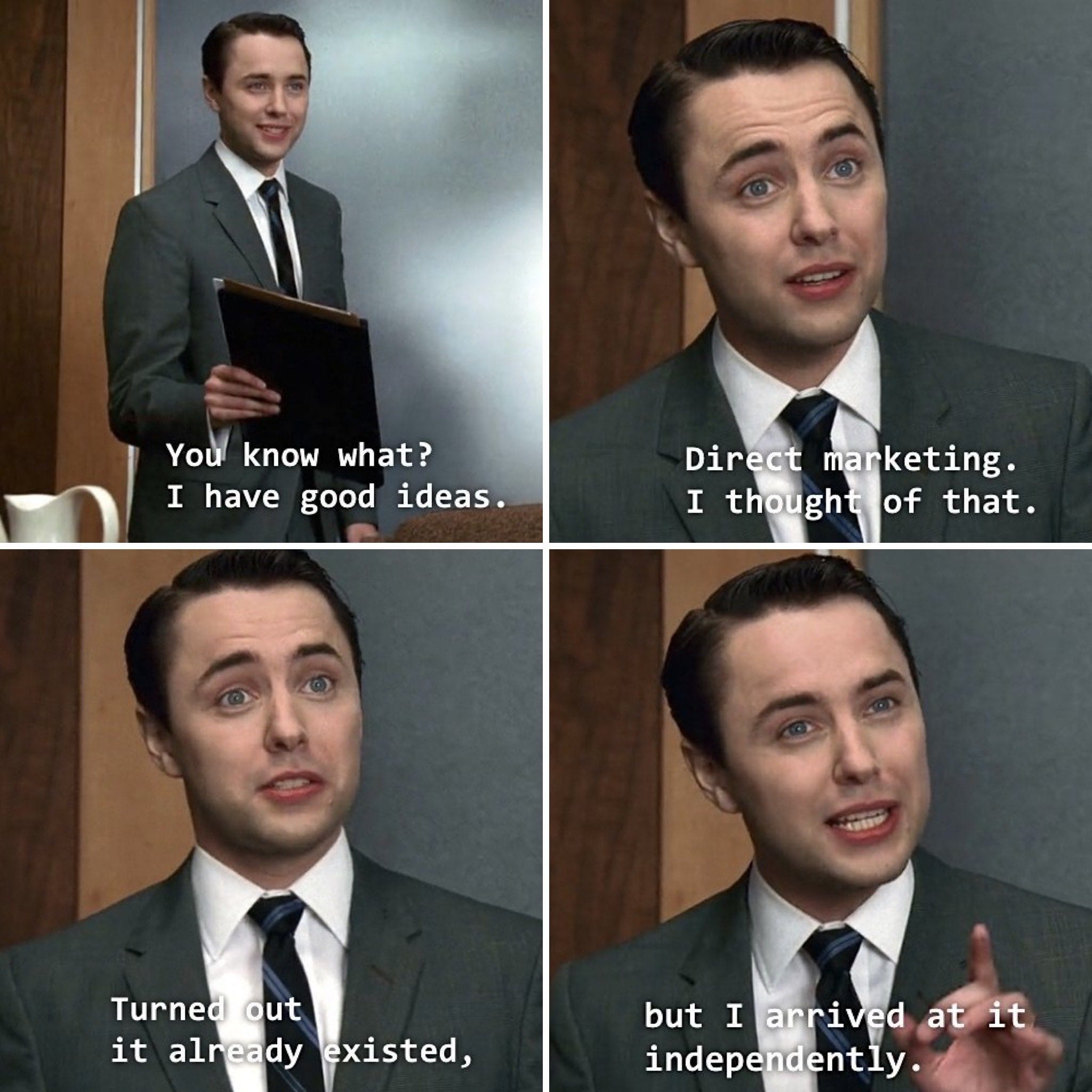
Which brings me to Situational Awareness, the topical story of the summer in the trading world. I, too, was an arrogant 24 year old looking to leverage my trading prowess into external capital to run a hedge fund at one point. Over and over, I was told to come back when I was older with more experience. And I was incensed by this, knowing that I had immutable alpha — my own edge of being perpetually awake and intuitively processing things at warp speed essentially means I am decades ahead of everyone at a similar age in terms of training data — and that the market regime was about to shift to a heavily retail-oriented one that I had 6 years of prior experience handling by 24 years old. To me, it was unfathomable that people wanted to wait to stake me.
But now, seeing the story of Leopold and his tens of billions — I was looking for a mere 10 million at the time — I’m pretty thankful I was told no. While I was waiting for my RIA approval, I sat down deeply and had to admit that what thought I wanted at 21 — to manage capital and trade with my own intuition — is no longer the life I want or desire in any way, and in fact, I think it’s mostly obsolete outside of having a networking edge. The future is not gonna be the hedge fund model, but agentic financial analysts and superhuman information processing are going to warp decision making at every level outside of zero day gambling. SALP is probably the definitive nail in my generation’s ability to raise a classic 2 and 20 fund.
If I got the bullet points of my current life situation at 22 years old, I’d think I busted out trading and was living off of inheritance money while doing something mundane. I’ve reoriented my life around lower taxes in a tier 3 city, areas with predictable regulations and politicians that actually have to obey budgets, and other common-sense “conservative” ideas that would seem ridiculous to someone who was destined to be a Master of the Universe. The fact that I am now a blogger/wealth manager, rather than someone making GDP-sized bets on the price of green tea in October 2027, would have felt like a waste of elite brainpower.
But this is precisely why 24 year olds shouldn’t be handed money at such scale. Only a 20s type who thinks they can dominate everyone that came before them could lever up and bet so much, and public markets are too complex and liquid to allow for pure imposition of will to invalidate math. There’s a certain life experience and gravitas that “managed money” should be handled with, and it’s why returns don’t matter anywhere near as much as your clients trusting you. And it’s just as much the fault of the Silicon Valley backers who never once sat down to properly understand why the structures of finance and the hierarchical gating and the endless failsafes exist before disrupting it or allowing a kid to lever beta to the point of absurdity as it is the central bank which detached the idea of “value” from “wealth” in the first place. Nobody understands why we do anything, anymore, and what value actually means. It’s certainly not reflected in valuations.
I don’t have definitive answers, but I do have a better process and understanding than what I see in the mainstream. The arrested development trope of the investing world is those still indexed on the 2010s era of free leverage, zero scrutiny, and narrative hype cycles. This is precisely the trap Anthropic has talked themselves into, where they are likely to find that utilitarian cultist doom fantasies aren’t a good way to sell an IPO to investors on a roadshow, and the path that OpenAI is seeking to course-correct from.
What Sam Altman realizes, what I realized over a year of trading, is that the only thing that matters is survival. You don’t play to make money quickly, you play so you can keep playing the game. The difference between Silicon Valley and the real world is that the numbers don’t feel real in the tech sphere. It’s too detached from enjoyment, which is why so much of the hype cycles are built around automations that normal people simply don’t need, as a way of avoiding interacting with reality. In the real world, investment capital is the summation of someone’s life and work. Losing their capital on speculative punts and too much leverage is akin to wasting someone’s blood and sweat. The gravitas with which investments should be handled is very different on this side of 25.
So, that’s where I’ve reinvented myself. There isn’t a day that goes by that I don’t miss trading, to some extent — there’s no better feeling than watching your trade tick further and further in the green as the EDM pumps through your headphones. It’s like riding the high of the collective consciousness of everyone else realizing you were right all along. But the way to stop that hedonistic treadmill of stimulation and ego is by curating a lifestyle that validates why that wealth was transferred to you in the first place.
One of my favorite quotes, ever, is from the Wolf of Wall Street: “The way I looked at it, their money was better off in my pocket. I knew how to spend it better.” And while that mentality was used to justify scamming people in the broker business, in the advice business, the fact that I know how to spend money better is a sign that I know how to allocate it better as well. To be a good advisor, your lifestyle has to be an advertisement that the finer things in life do exist, and provide a playbook on how to get there. And that’s a commitment I’m willing to make.
In the coming weeks, I’ll reach out personally to everyone who’s stuck through this adventure through time and markets and provide a more clear update on where this site is heading, where my content in general is heading, and how I plan to share my perspective going forward. I have kept meticulous tabs on everyone who has lurked, read and replied over the past decade, and I wouldn’t be able to reach these conclusions without this reservoir of smart people to interact with in whatever way I can.
In the mean time, feel free to request access to my private site where I’ll post more personal, lifestyle curated content:
(I think this site should remain a place for financial philosophy, personally, and there’s much more to life than staring at screens and thinking about capital.)
Apologies for the delay, you can blame New Jersey for that one.